


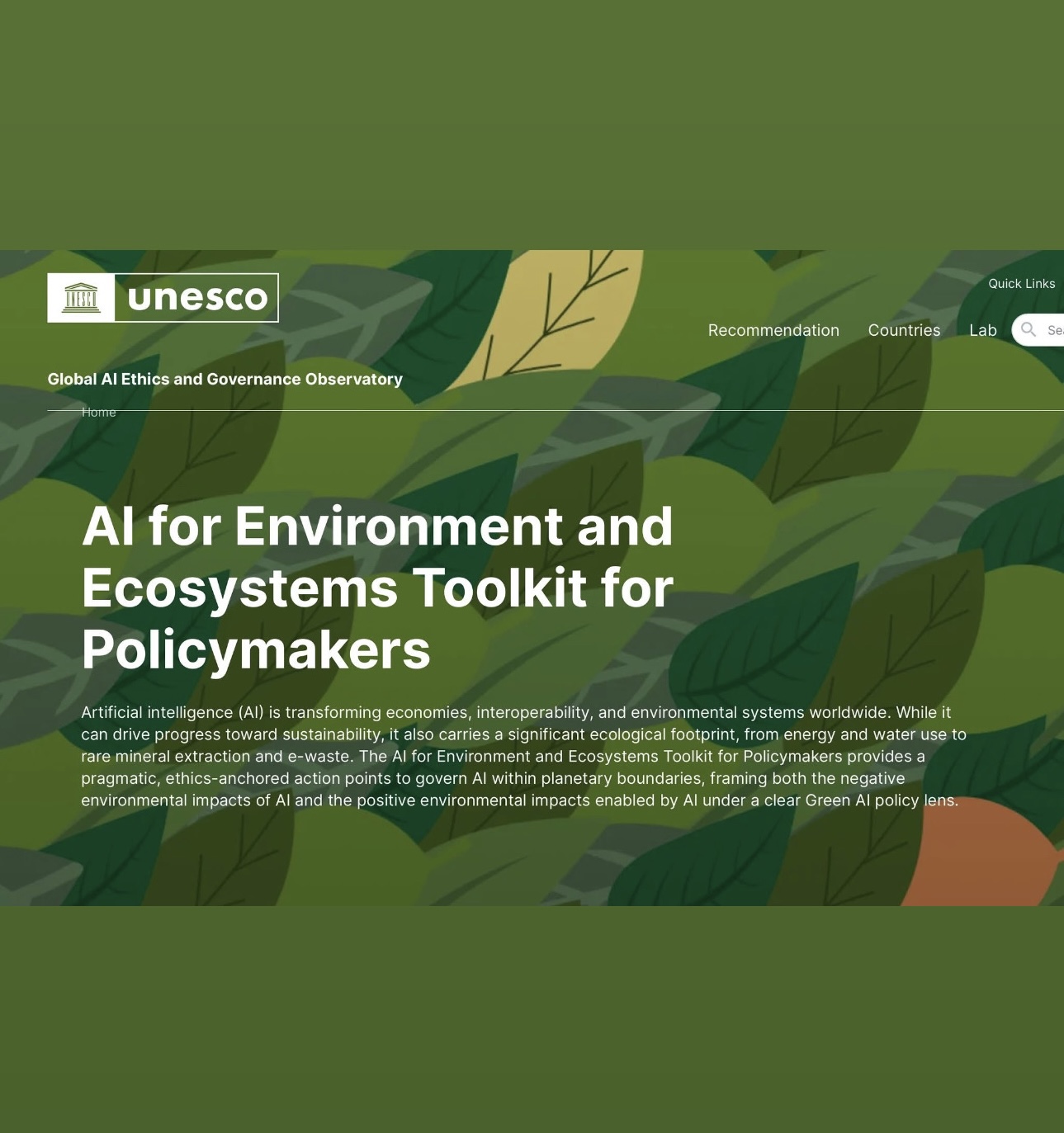
UNESCO AI for Environment and Ecosystems Toolkit for Policymakers
UNESCO-MOST BRIDGES is pleased to share the UNESCO AI for Environment and Ecosystems Toolkit for Policymakers that was launched in the last week of April, 2026, by UNESCO.
UNESCO-MOST BRIDGES is pleased to share the UNESCO AI for Environment and Ecosystems Toolkit for Policymakers that was launched in the last week of April, 2026, by UNESCO.
'The Futures of Royal Animals in Cameroon’s Grassfields: From Literary Imagination to Participatory Foresight.' Published in ‘World Futures Review’ Kenneth Toah Nsah’s research explores the intersection of literary analysis and participatory foresight to address the survival of ‘royal’ and ‘sacred’ animals in the Cameroon Grassfields. Focusing on species of deep cultural significance, such as lions, leopards, elephants, buffaloes, and the Bannerman’s Turaco, the study examines their vulnerability amidst the global biodiversity crisis.
We are delighted to share The Fifth Element’s 2025 activity report. The Fifth Element’s work is “rooted in a simple but urgent conviction: that bridging the human gap between our capacity to act and our ability to understand the consequences of that action is the defining challenge of our time.” The report covers last year’s key developments and learnings across The Fifth Element’s threads of work.
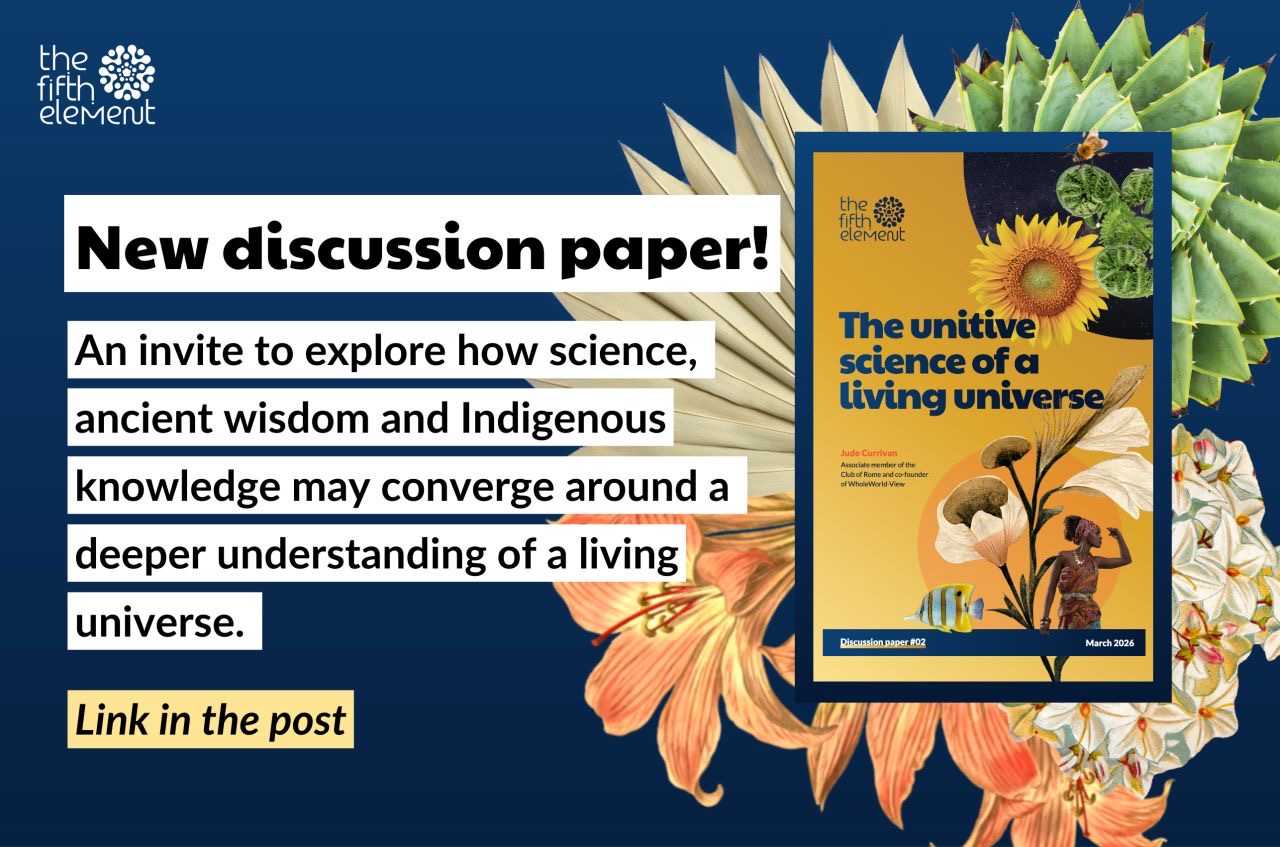
We are excited to share the second paper of The Fifth Element’s discussion paper series: 'The unitive science of a living universe' by Jude Currivan, associate member of the Club of Rome and co-founder of WholeWorld-View.
This chapter by Franz Krause offers a fascinating look at Aklavik, a hamlet of approximately 600 inhabitants in the Mackenzie River Delta. It explores how the collision of Western "river literacy" and the volatile Arctic environment creates a state of liquescence, both physical and social. This chapter explores key concepts and provides pertinent observations on: The People and the Place; "River Literacy" vs. Delta Reality; The Evolution of Infrastructure; Liquescence vs. Liquefaction; The 2006 Flood and Infrastructure Failure; and Socio-Political Shifting Ground.