Latest News

Advancing the Environmental Humanities: From Australia to Germany

In her article "Advancing the Environmental Humanities: From Australia to Germany", Prof. Dr. Kate Rigby outlines how the creation of Multidisciplinary Environmental Studies in the Humanities (MESH) has been the culmination of a journey that she embarked on some twenty-five years ago as a founding member of Australia’s National Working Group in the Ecological Humanities.
Building on Shifting Ground: Liquescence in an Arctic River Delta

This chapter by Franz Krause offers a fascinating look at Aklavik, a hamlet of approximately 600 inhabitants in the Mackenzie River Delta. It explores how the collision of Western "river literacy" and the volatile Arctic environment creates a state of liquescence, both physical and social. This chapter explores key concepts and provides pertinent observations on: The People and the Place; "River Literacy" vs. Delta Reality; The Evolution of Infrastructure; Liquescence vs. Liquefaction; The 2006 Flood and Infrastructure Failure; and Socio-Political Shifting Ground.

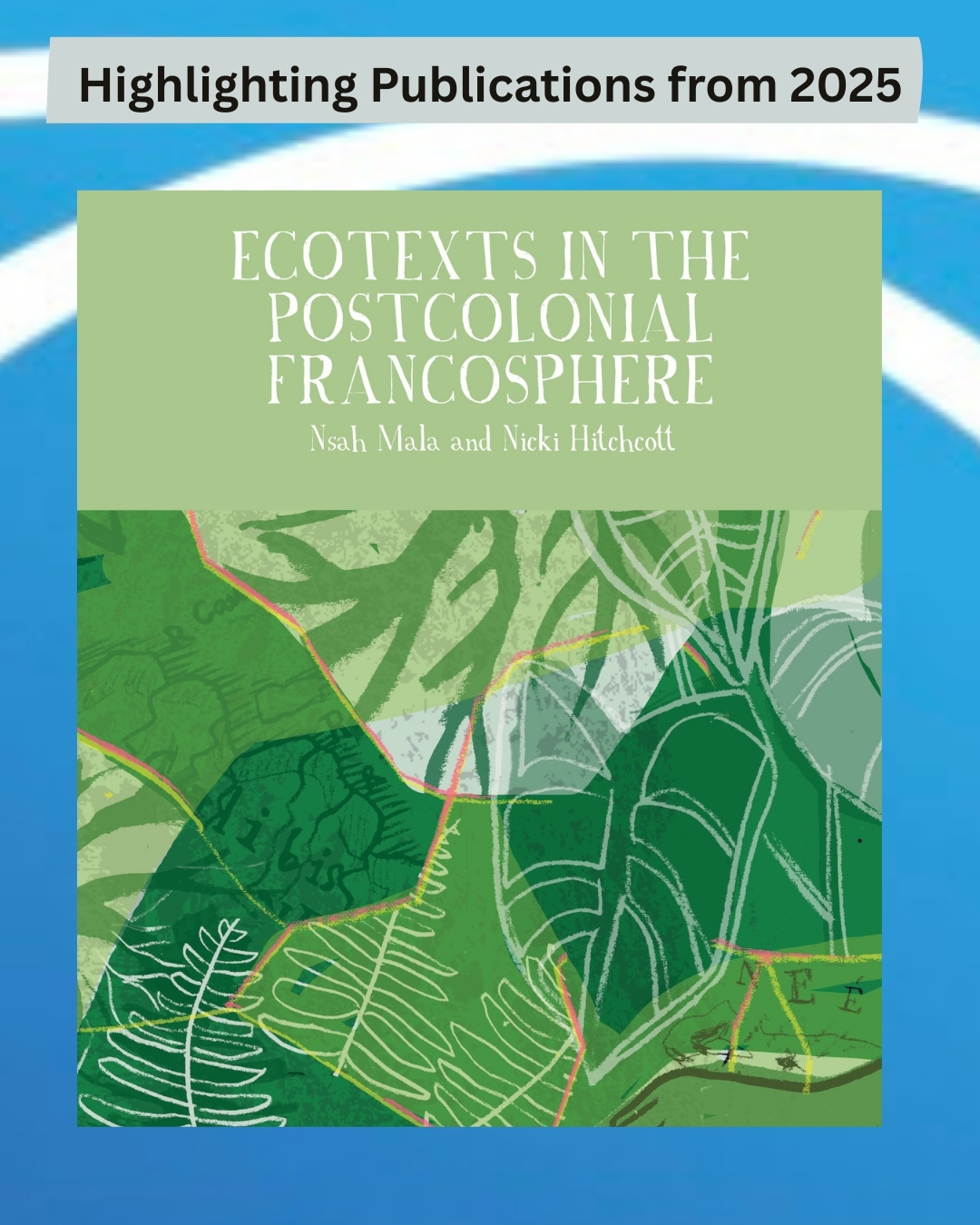
Highlighting Publications from 2025: Ecotexts in the Postcolonial Francosphere

Continuing our series highlighting publications from 2025, we focus on a volume that shifts the geography of environmental thought. Through the diverse voices of the French-speaking world, this book explores the various ways in which francophone writers, visual artists and activists are responding to the global climate and environmental crises threatening the Earth today, through an imperative postcolonial lens.

Agency in the Anthropocene

In this piece, the author explores the tension between modern educational demands and the actual capacity for student agency within the framework of the Anthropocene and climate activism. The text critiques prevailing educational models associated with these movements, drawing on environmental humanities research to highlight the inherent contradictions and complexities of human agency in a changing climate. As an alternative, the author proposes a "pedagogy of flourishing."

We use cookies to personalize content and to analyze our traffic. Please decide if you are willing to accept cookies from our website.