Posted in BRIDGES IPO news, News on Oct 20, 2026.
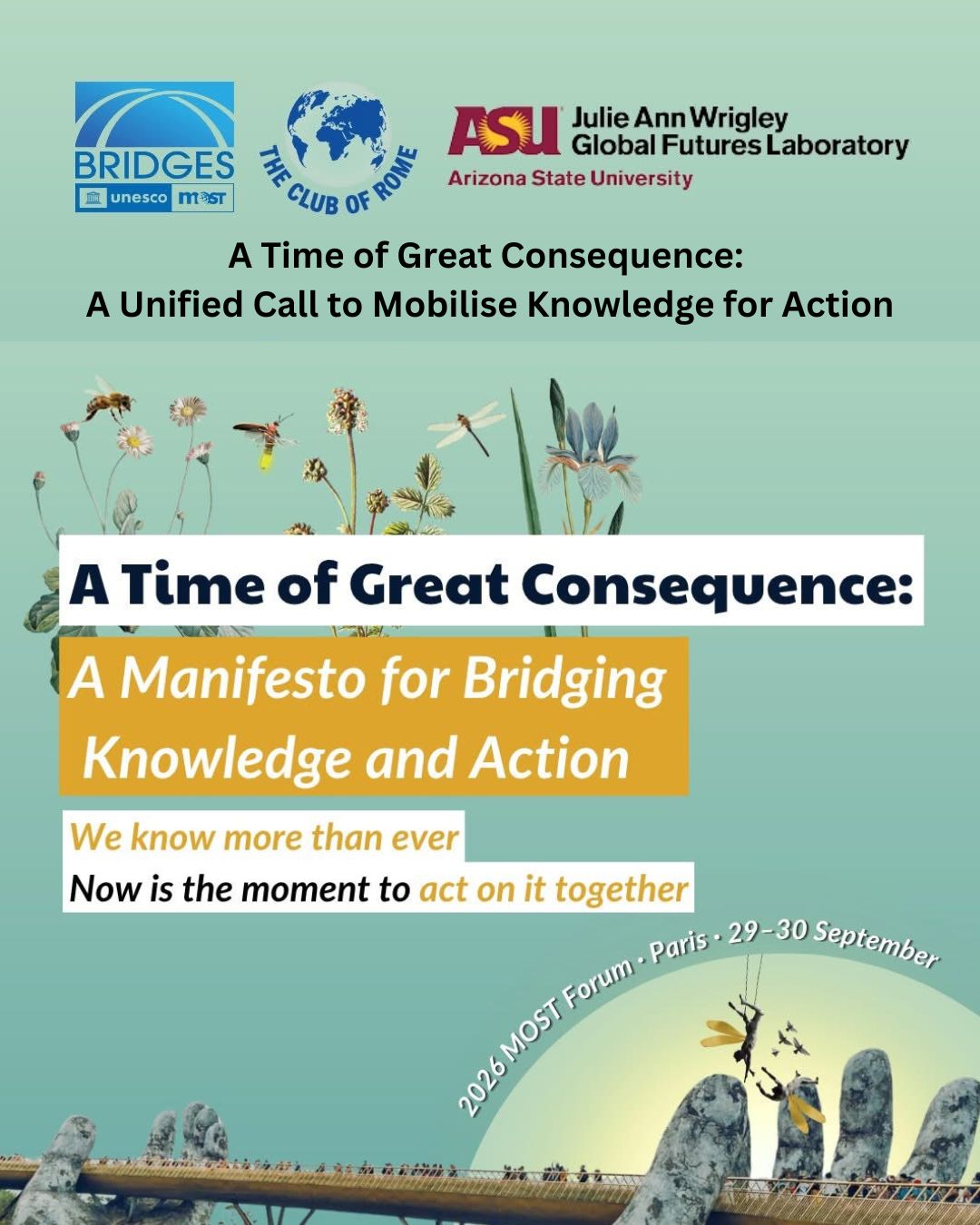
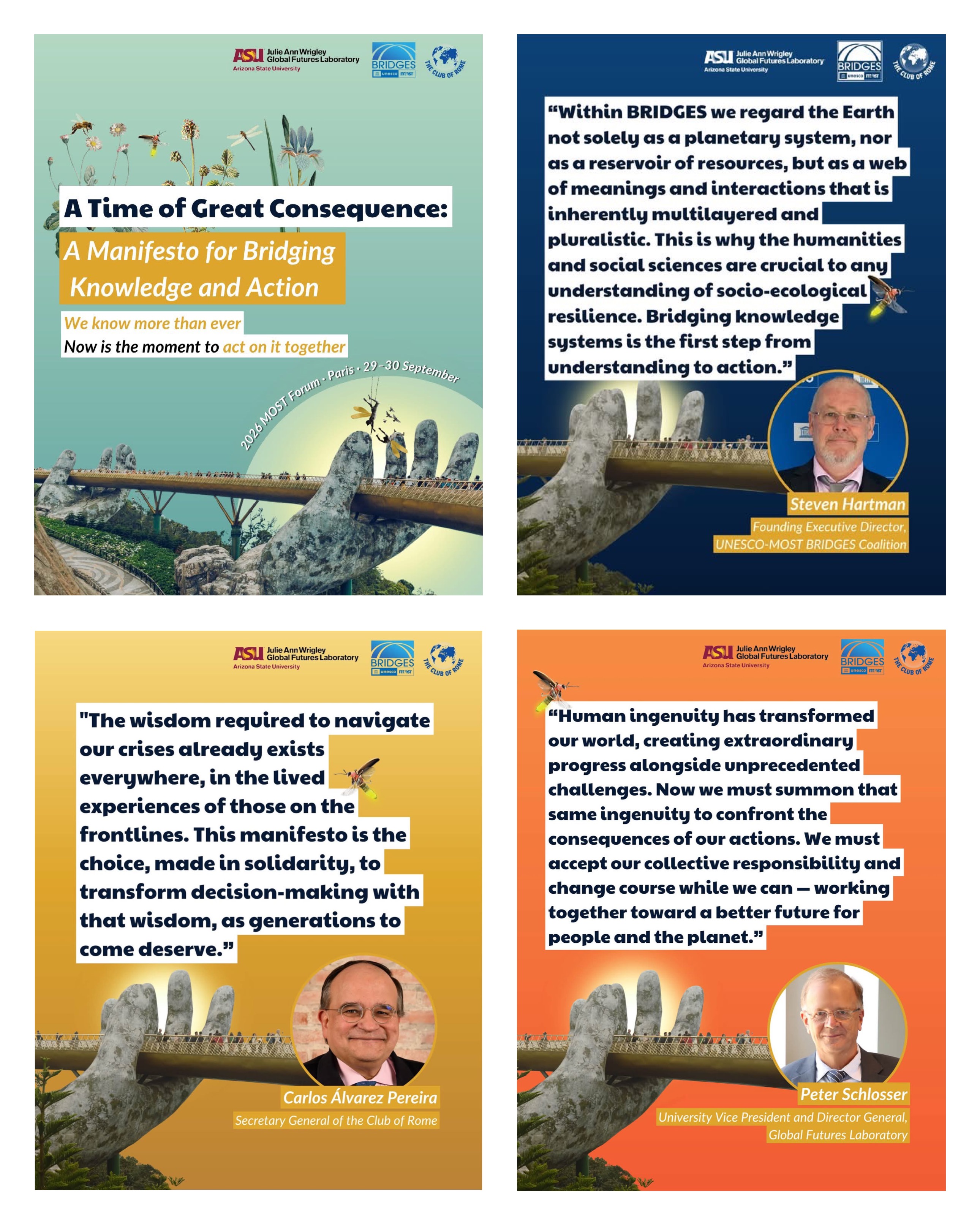
The opening line of the “A Time of Great Consequence” manifesto cuts straight to the core: "We are living in a time of great consequence. We act as if we are not."
Published jointly by the BRIDGES Coalition within UNESCO's MOST programme; Arizona State University’s Julie Ann Wrigley Global Futures Laboratory; and The Club of Rome; this manifesto calls for the synthesis of diverse knowledge systems to drive collective action for the common good of people and planet. It establishes a foundational vision for integrated governance—aligning policy with social justice, sustainability, and planetary belonging—by committing to:
Bridging knowledge systems to enhance humanity's ability to understand and navigate an interconnected world.
Fostering collaborative deliberation across differing values and perspectives to build trust and shared purpose.
Renewing institutions so they learn alongside the communities they serve, connecting insight with imaginative, responsible, and forward-looking action.
Formally approved alongside a Policy Framework by the UNESCO MOST Intergovernmental Council (IGC), the text addresses real-world policy needs by integrating the humanities, social sciences, and Indigenous wisdom into governance to drive transformative change. A practical Policy Toolkit accompanies these instruments to help Member States and regional offices apply these approaches directly to public policy.
The vision is reflected in these shared statements from the organising voices:
Viewing Earth as a Living Web
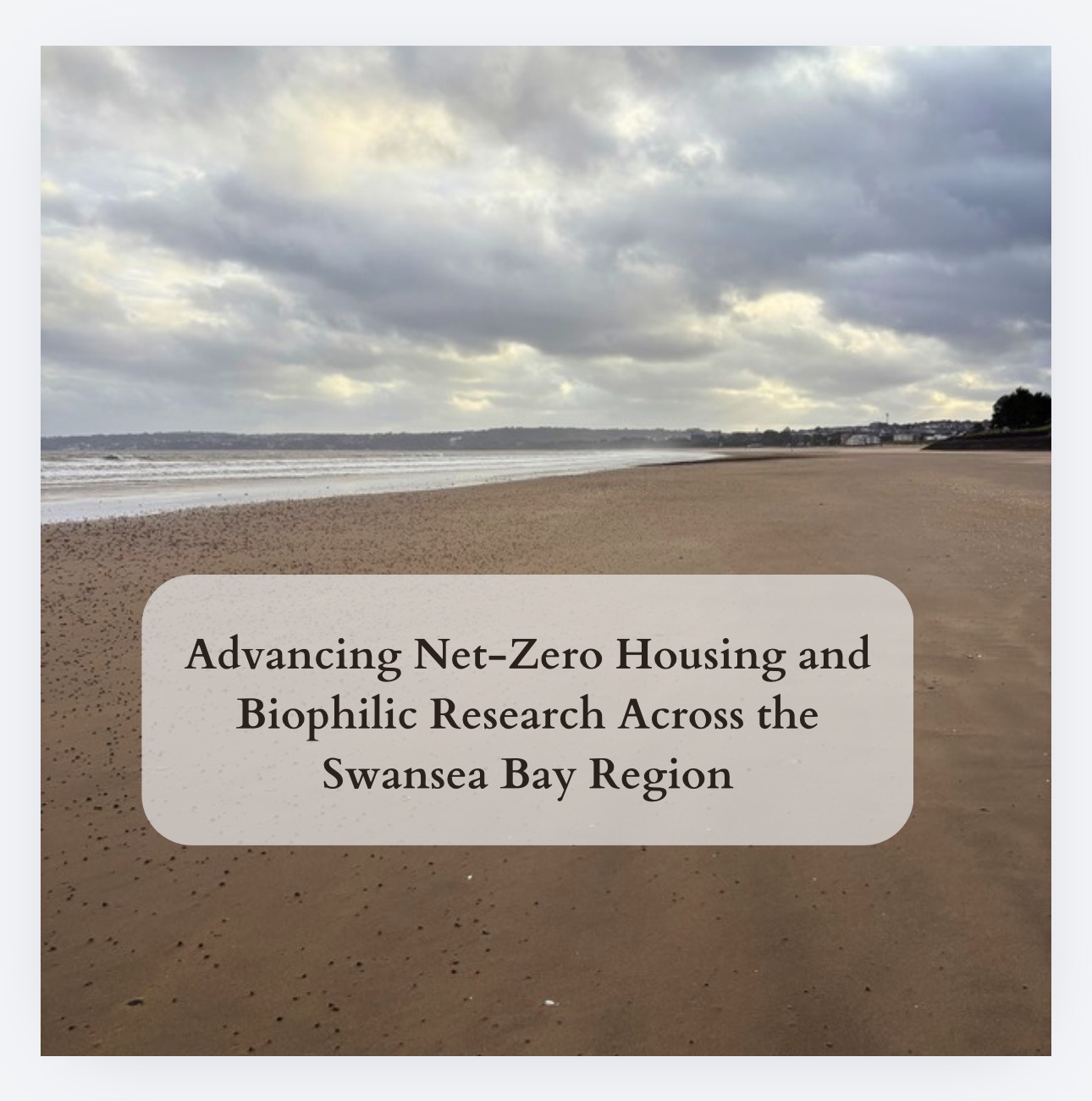
The manifesto is designed as an active call to bridge diverse knowledge systems—from Indigenous and local wisdom to social and environmental sciences—with real-world policy and community action. Steven Hartman’s statement of support is a call to connect knowledge systems and harness the actionable wisdom found in the humanities, social sciences, and local knowledge to build true socio-ecological resilience.
Within BRIDGES we regard the Earth not solely as a planetary system, nor as a reservoir of resources, but as a web of meanings and interactions that is inherently multilayered and pluralistic. This is why the humanities and social sciences are crucial to any understanding of socio-ecological resilience. Bridging knowledge systems is the first step from understanding to action.
— Steven Hartman, Founding Executive Director, UNESCO-MOST BRIDGES Coalition.
Transforming Decision-Making Through Frontline Wisdom.
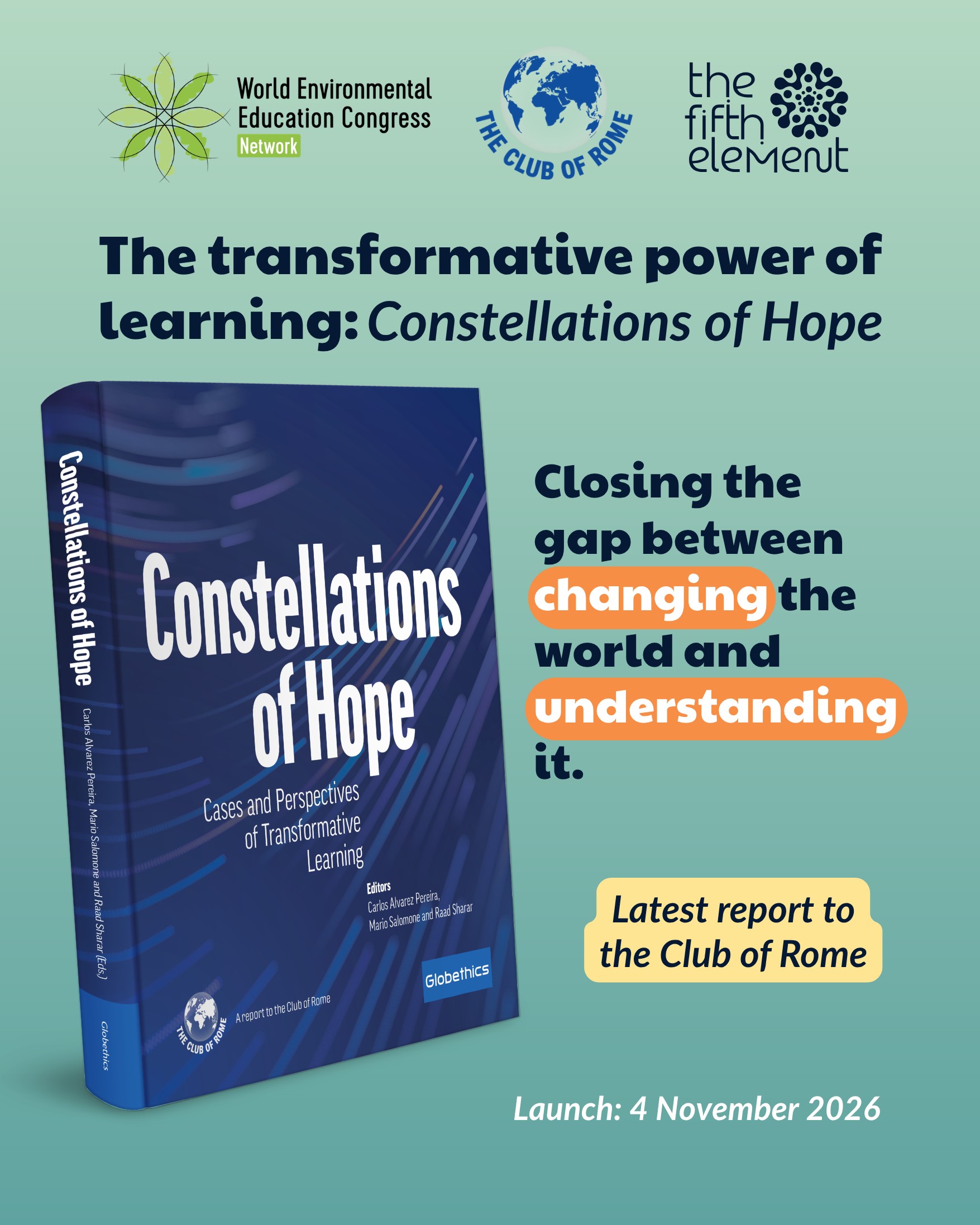
Carlos Álvarez Pereira’s statement of support on the manifesto is a call to transform decision-making through lived experience and global solidarity. In the face of cascading global crises, traditional top-down decision-making often overlooks the most vital insight available: the lived experience of local communities. True resilience requires creating genuine spaces where scientific research and frontline wisdom inform one another to reshape governance and policy.
The wisdom required to navigate our crises already exists everywhere, in the lived experiences of those on the frontlines. This manifesto is the choice, made in solidarity, to transform decision-making with that wisdom, as generations to come deserve.
— Carlos Álvarez Pereira, Secretary General of The Club of Rome.
Redirecting Human Ingenuity Towards Collective Responsibility
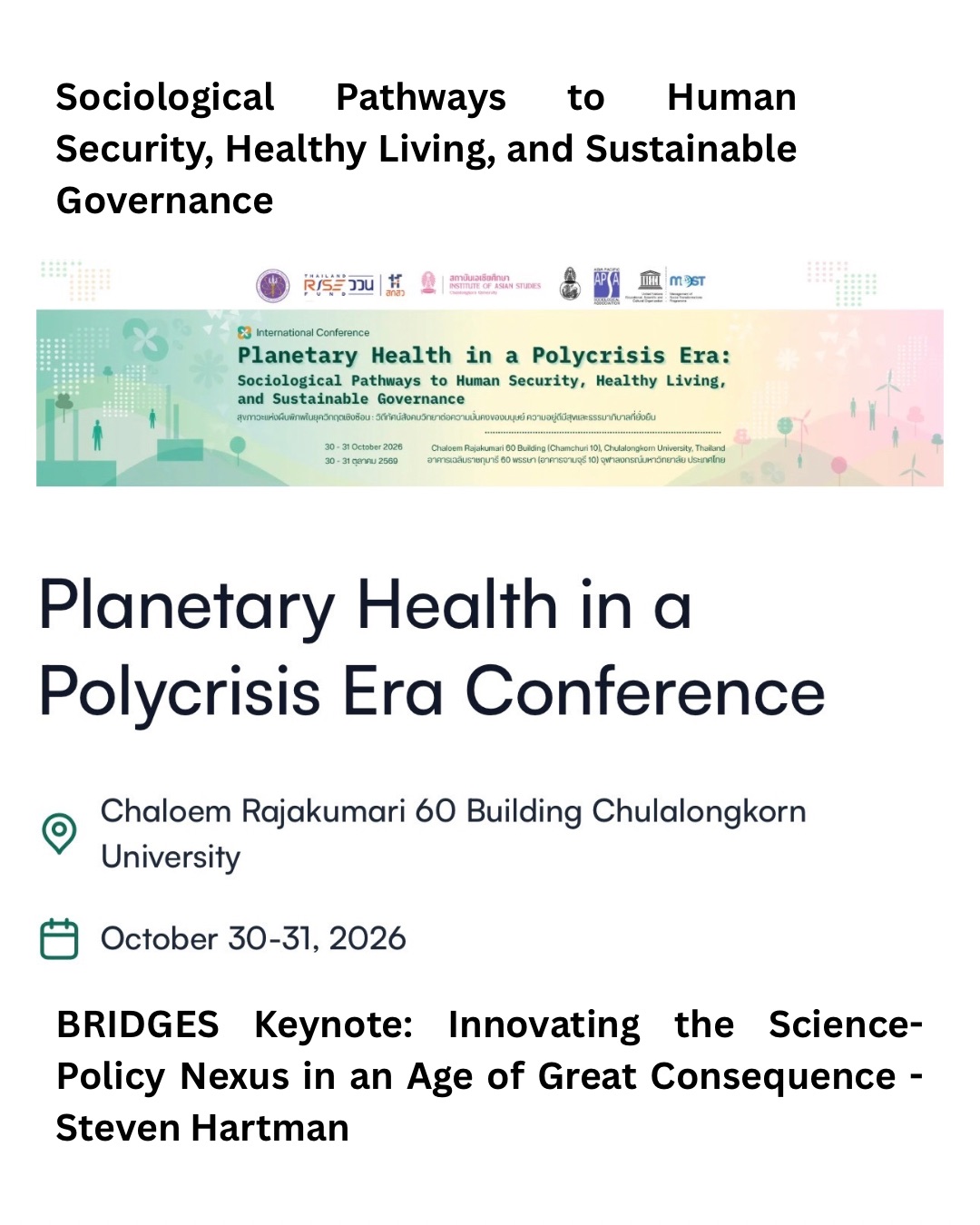
Peter Schlosser reflects on confronting the consequences of progress and reshaping institutions for the future. Human ingenuity has driven unprecedented technological and industrial progress—yet it has also created environmental challenges of equal magnitude. To change course, our institutions must evolve from static systems into learning networks that adapt alongside the communities they serve.
Human ingenuity has transformed our world, creating extraordinary progress alongside unprecedented challenges. Now we must summon that same ingenuity to confront the consequences of our actions. We must accept our collective responsibility and change course while we can — working together toward a better future for people and the planet.
— Peter Schlosser, University Vice President and Director General, Julie Ann Wrigley Global Futures Laboratory, Arizona State University.
Bridging Knowledge and Action
Together, these statements reflect the core mandate: bridging the full spectrum of human knowledge, enabling cross-cultural deliberation, and renewing public institutions so they learn in partnership with and support their communities.
The Manifesto stands as an open, universal call for global solidarity and collective responsibility across all sectors of society—inviting communities, leaders, and individuals worldwide to unite behind a shared vision.
Get Involved
Read & Share the Manifesto: Access the full text, share it across your networks, and get on board with shaping a regenerative future for people and the planet.