Latest News: Building Reflexive Practice across Project REPAIR...


Latest News: Building Reflexive Practice across Project REPAIR...
Posted in News, UWTSD Hub News on Apr 24, 2026.
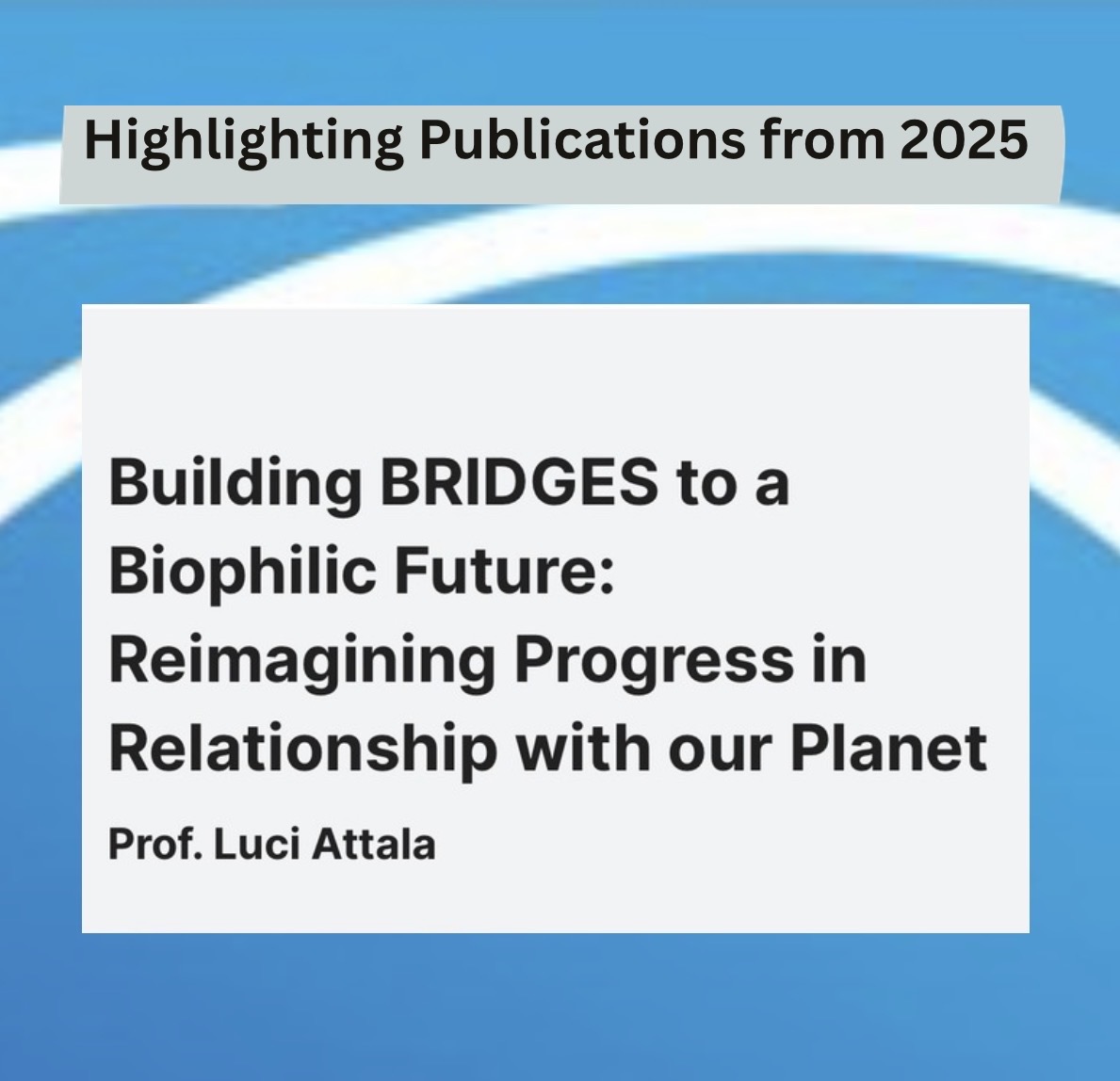
We are pleased to highlight a significant contribution to the global dialogue on sustainability and progress, by Prof. Luci Attala, Deputy Executive Director of UNESCO-MOST BRIDGES, and Director of the BRIDGES UK Hub based at University of Wales Trinity Saint David (UWTSD). This compelling thought piece titled “Building BRIDGES to a Biophilic Future: Reimagining Progress in Relationship with our Planet” featured in UNESCO’s Futures Literacy and Foresight Collection, challenges the traditional metrics of success and offers a transformative framework for navigating our current era of "poly-crises."
Redefining Progress Beyond Growth
In the article, Prof. Attala argues that our current understanding of progress is dangerously narrow, dominated by economic growth (GDP) and technological innovation. While these factors are often prioritised due to their measurable outcomes, they frequently overshadow critical values like social equity and environmental health.
The piece advocates for a biophilic (life-loving) approach. This perspective reconfigures progress by:
The Bridge as a Metaphor for Resilient Systems
Central to the argument is the metaphor of the bridge. A bridge serves as a connection between two points, facilitating the free movement of ideas and resources. In the context of the BRIDGES coalition, this metaphor represents the vital link between today’s decisions and the needs of future generations.
By utilising anticipatory governance and futures thinking, we can proactively shape systems that serve both the present and the future, ensuring that the planet's needs are embedded directly into development priorities.
A "Grounded" Alternative: Biophilic Economics
The article introduces biophilic economics as a vision that echoes the Indigenous principle of care for life. Rather than discarding standard economic concepts, it reframes them through an ecological lens:
“Through this lens, progress shifts from being human-centric and defined by material wealth, to the capacity to distribute, collaborate and nurture - much like the symbiotic relationships in nature."
Moving Towards Action
To transition from reactive fixes to long-term solutions, Prof. Attala provides specific recommendations for two key groups:
For Knowledge Producers:
For Policymakers:
As we navigate growing social inequalities and environmental uncertainty, the intersection of futures literacy and the inclusive BRIDGES approach provides a model for a more just future. By placing care and equity at the centre of our thinking, for all species, we can move toward a regenerative world.
The full thought piece is available to read on UNESCO’s Futures Literacy and Foresight website. This collection features insightful essays from a variety of specialists who delve into the future trajectory of social and economic advancement. The thought pieces shared demonstrate the transformative potential of futures-oriented approaches across policymaking, education, cultural practices, and governance.
This article on UNESCO’s Futures Literacy and Foresight site can be accessed directly via this link.
And via this link published on UNESCO articles.
Also accessible via our Publications page on the BRIDGES website.

