Posted in News, UWTSD Hub News on Feb 10, 2026.
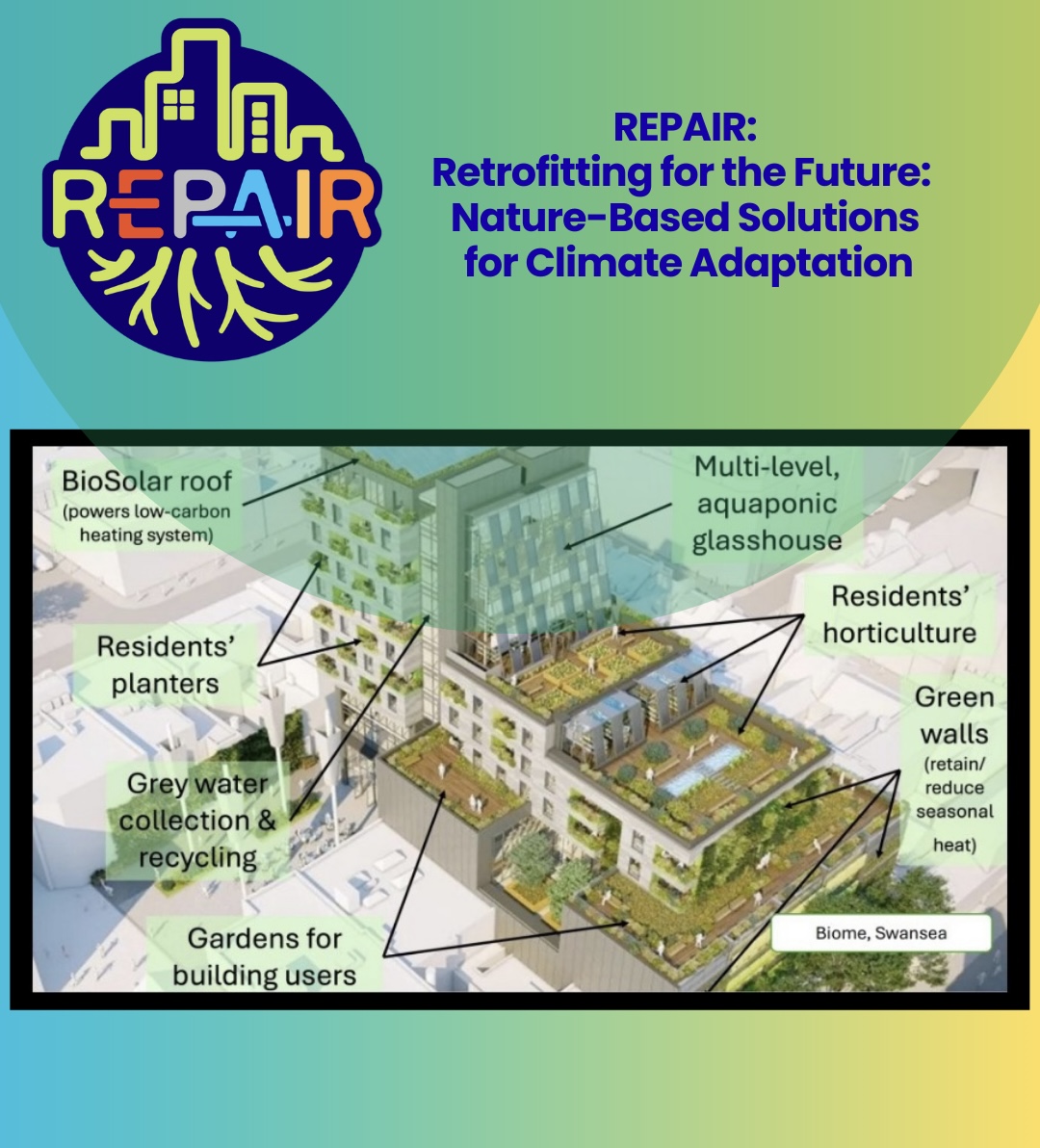
Work is well underway on the ground-breaking “REPAIR: Retrofitting for the Future: Nature-Based Solutions for Climate Adaptation” project. The ambition is to transform the urban landscape by integrating nature, wellbeing, and sustainability. The four-year project is one of just three across the UK chosen for funding through AHRC’s new Mission Awards.
Bringing Nature Back to the City
Through this project, the city of Swansea, Wales, is set to become a beacon of sustainable, nature-led urban living. This innovative initiative is pioneering a new way to adapt older urban buildings to the challenges of climate change and wellbeing.
At the core of this transformation is the concept of biophilic design, working with nature, not against it, to create spaces that promote human and ecological health.
The Biome: A 'Living Building' Case Study
The flagship of the project is the transformation of Swansea’s former Woolworths building into 'The Biome'. This unique 13-storey structure is being retrofitted to become the UK’s first 'living building', seamlessly integrating social housing, office space, retail, and community facilities with nature at its core.
The Biome will serve as an in-depth case study, demonstrating how old buildings can be reimagined as sustainable, liveable places. Due for completion in Spring 2026, the goal is to create a blueprint for cross-sector culture change and accelerate the global movement toward socially inclusive biophilic living.
Transdisciplinary strength
BRIDGES Deputy Executive Director, Dr. Luci Attala, and Director of the UK BRIDGES Hub at the University of Wales Trinity Saint David (UWTSD), is excited to be part of the team and at the heart of the co-led project, bringing her expertise in Environmental Anthropology and New Materialities.
This transdisciplinary initiative brings together academics from Swansea University, the University of Wales Trinity Saint David (UWTSD), and University College London (UCL). By bridging the gap between research and real-world application, the team works in close collaboration with citizens, residents, and societal partners, Swansea Council, Natural Resources Wales (NRW), Hacer Developments, and Codi social housing, to rethink urban living.
A Humanities-anchored Vision
Dr. Attala emphasises that this project goes beyond bricks and mortar. "Retrofitting for the Future is a thrilling step forward, perfectly aligned with the UNESCO-MOST BRIDGES principles and ambitions," she stated. "This isn't just about reshaping cities; it's about reimagining how we live in them, both structurally and emotionally."
The project champions a humanities-anchored approach, focusing on co-creation and lived experience, to ensure community voices are central to shaping the future of urban life.
Braiding Methods and Findings
The project’s core methodology is uniquely defined as a "braiding" process; a deliberate intertwining of diverse research methods and findings. This approach aims to generate novel insights into how communities can thrive while building essential resilience against a changing climate. Rather than treating social wellbeing and environmental safety as separate issues, REPAIR treats them as a single, unified challenge.
A vital strand of this work that Dr. Attala is contributing to is the "Lived Experience" thread, which seeks to understand the human side of green infrastructure. By utilising sensory ethnography and artistic approaches, researchers are exploring the nuances of "biophilic" living, the innate human connection to nature. This specific focus investigates how residents actually feel, see, and interact with nature-based solutions in their daily lives, ensuring that future climate strategies are rooted in genuine human experience.
Retrofitting Our Relationships
The "Retrofitting for the Future" project is an exciting opportunity to transform more than just buildings; it’s about transforming our fundamental relationships with nature, each other, and the systems that govern us.
By identifying the challenges that hinder widespread adoption of biophilic design, the team aims to deliver evidence-based, replicable pathways for biophilic urban adaptation and retrofitting, ensuring a safer, fairer, and greener pathway into our shared future.
Biophilic City Bid
An exciting development central to this innovative initiative, is Swansea city’s intention to apply for global biophilic city status! Read more about this exciting advancement here.
Watch this space
We will be sharing further news on the "Retrofitting for the Future" project in the coming months, diving a little deeper into the inspiring work that’s taking place.