Posted in News on Mar 05, 2026.
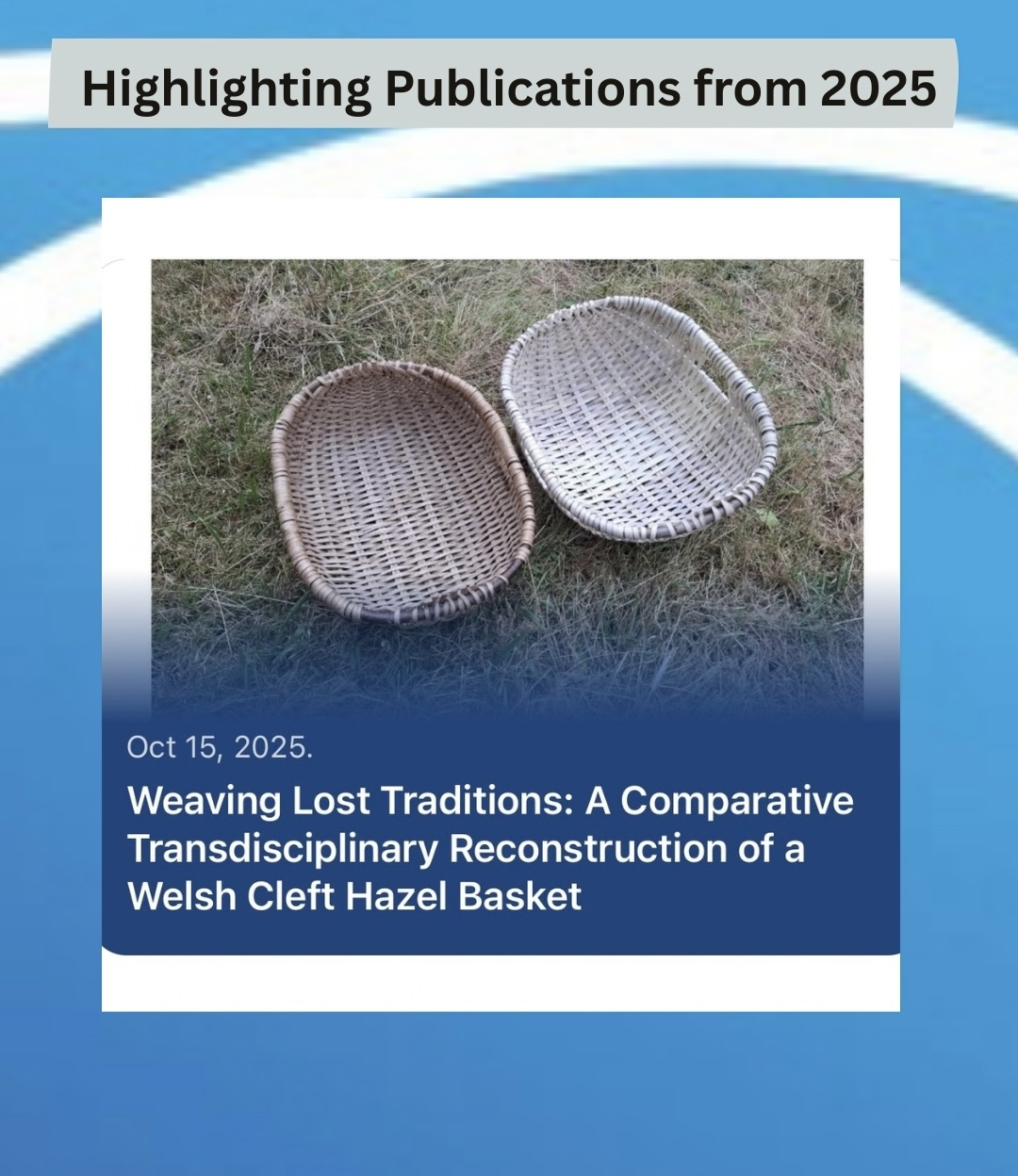
Highlighting Publications: Weaving Lost Traditions – A Welsh Cleft Hazel Basketry Reconstruction.
Author: Gareth Thomas. Published in: EXARC Journal Issue 2025/2. 2025.
As part of our ongoing series highlighting publications from 2025, we are spotlighting a publication that digs deep into the roots of Welsh heritage and the "tacit" knowledge held within the hands of traditional makers.
"Weaving Lost Traditions: A Comparative Transdisciplinary Reconstruction of a Welsh Cleft Hazel Basket," offers a profound look at how we preserve, and sometimes fail to fully capture, heritage crafts; which are rooted in tradition sustained by a community in constant dialogue with its environment.
This research uses Welsh cleft hazel basketry as a lens to explore the gap between technical instruction and the deep, place-based expertise of traditional craftspeople. By focusing on the specific, labour-intensive art of cleft hazel basketry, this study serves as a vital case study for the UNESCO-MOST BRIDGES community on the importance of "ecological literacy" in maintaining local resilience.
Lived Tradition
The research utilised a transdisciplinary methodology, blending technical descriptive analysis with ethnographic observation.
The project tracked a volunteer-led initiative as they attempted to reconstruct these traditional baskets from scratch. By comparing their struggles and successes with the established practices of seasoned makers, the study mapped the invisible "knowledge gap" that exists when a tradition is no longer lived.
This research focuses on the process, revealing that a basket is a manifestation of a relationship with the land.
Ecological Literacy & Traditional Approach
Traditional makers draw on generational knowledge, aligning their material selection with seasonal rhythms, they "read" the woodland. They know which hazel rods will split cleanly based on the soil, the shade, and the time of year. Their work integrates biophilic design principles, resulting in structures that possess both cultural resonance and superior physical resilience.
The Volunteer Experience
Despite best efforts, those without a lived connection to the craft struggled with sourcing and technique. Without the "tacit skill" developed over years of practice, the resulting baskets often lacked the durability and visual coherence of the originals.
Living Practice
This study serves as a reminder that heritage is a living, situated practice. It suggests that while experimental reconstruction is a valuable tool for insight, it cannot fully replicate the depth of a tradition sustained by community and environment over centuries. This research emphasises that to truly "save" a craft, we must value the practitioners as much as the products.
“The study embraced an experiential and ethnographic lens to explore lost traditions, emphasising the value of heritage crafts as living, situated practices."
Read the Full Paper
This is an Open Access publication, access the paper here: EXARC Journal Website