Location: Zooom
Location: Zooom
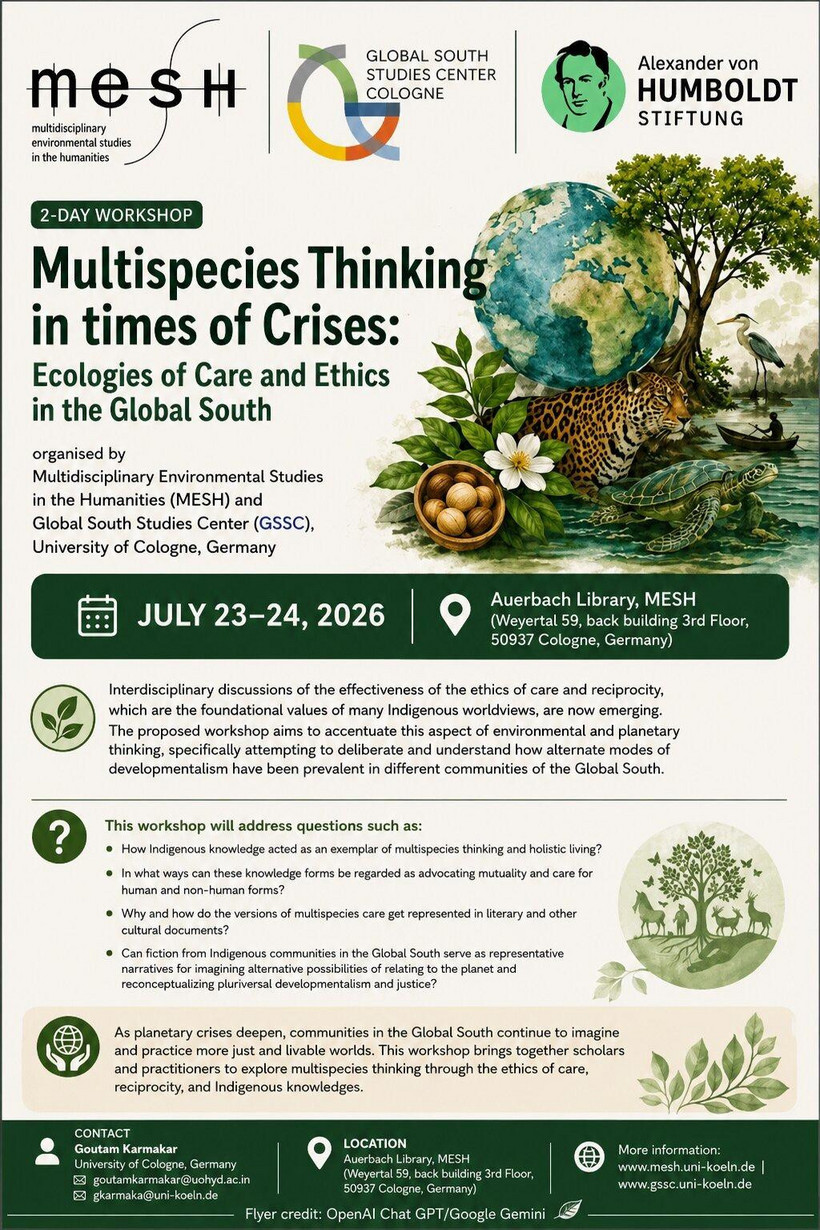
WORKSHOP Interdisciplinary discussions of the effectiveness of the ethics of care and reciprocity, which are the foundational values of many Indigenous worldviews, are now emerging. The proposed workshop aims to accentuate this aspect of environmental and planetary thinking, specifically attempting to deliberate and comprehend how alternate modes of developmentalism have been prevalent in different communities of the Global South.
Location: Auerbach Library, MESH (Weyertal 59, third floor)
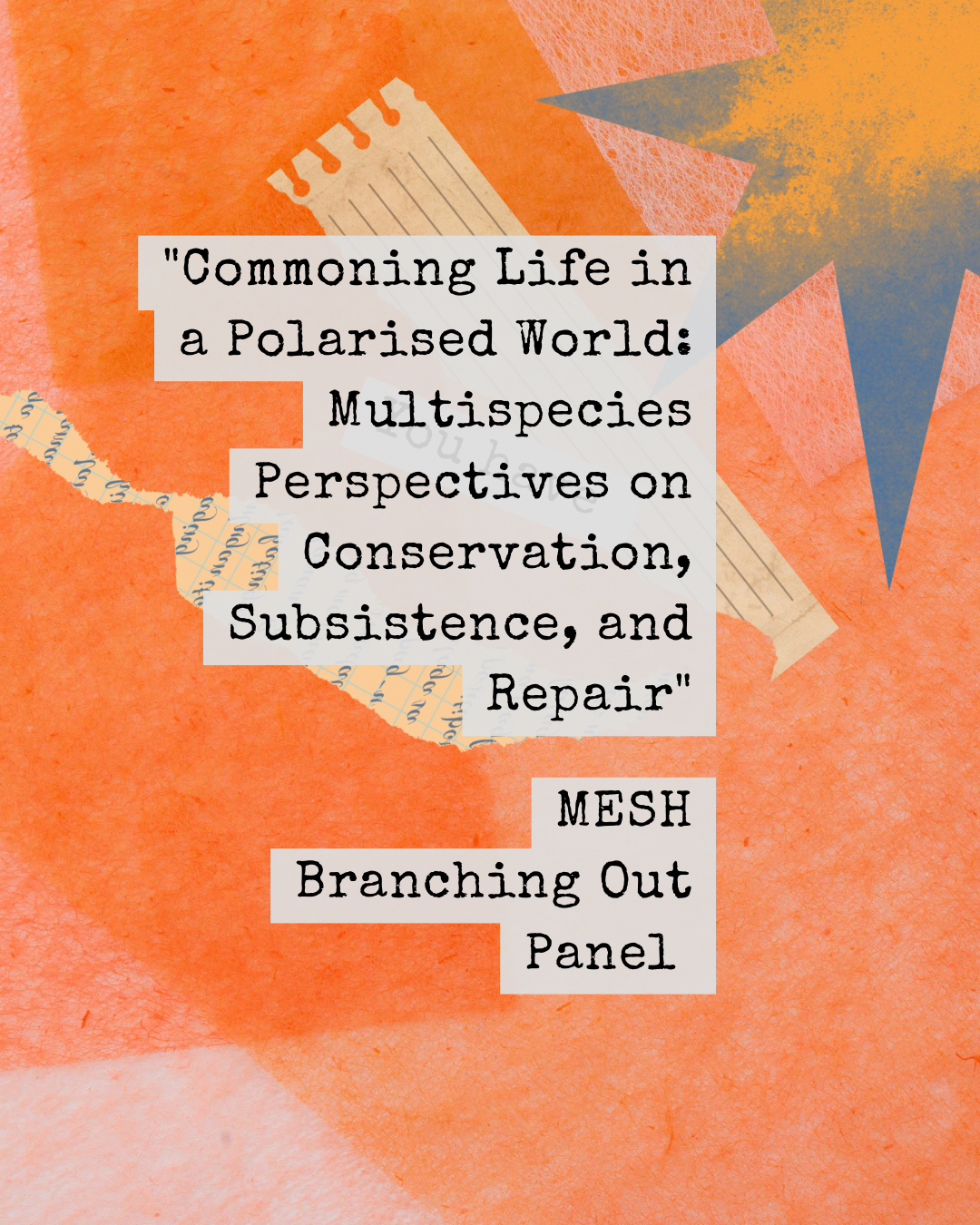
MESH Branching Out Panel at EASA2026 conference. How can multispecies practices of commoning - beyond oppositions of conservation, subsistence, stewardship and use - sustain shared worlds? Exploring these practices amid intensifying political and ecological polarisation, we discuss possibilities for coexistence and repair in a fractured world.
Location: Poznań (POL)
What if the climate crisis is not merely about rising temperatures, but about forgotten histories of colonial violence, extraction, and ecological erasure? This masterclass addresses this significant question through Amitav Ghosh’s The Nutmeg’s Curse and Ghost-Eye. While these texts serve as important points of departure, the discussions move beyond literary analysis to re-engage with the theoretical interventions of Dipesh Chakrabarty, Donna Haraway, Jane Bennett, and Rob Nixon to rethink the climate crisis, non-human agency, slow violence, and planetary justice.
Location: Online
The talk will stress the need to open up decolonial thinking to that of Deleuze & Guattari by arguing that both remain committed to creating a non-modern, non-colonial aesthesis in their own way. The lecture will first show how the constitutionality of planetarity and decoloniality expresses the differences in how Deleuze, Heidegger, Chakrabarty and Mignolo reconstructed the prevalent imaginary of Earth, Planet, subjectivity and epistemology.
Location: Online. Zoom. Registration required.